Energy Cost Management: A First Order Consideration for Fleets

Energy Cost Management: A First Order Consideration for Fleets

Energy Cost Management: A First Order Consideration for Fleets

Embracing electric vehicles (EVs) is a smart choice for high utilization fleet operators, promising lower operational costs despite the higher upfront investment. However, this switch isn't as straightforward as it may appear. Transitioning from gasoline or diesel to electricity marks a considerable change; and without considering energy management can lead to unnecessary costs and reduced operational savings.

In this article, our Transit Electrification Lead, Tyler Seed, explores various strategies to monetize charging assets and generate additional revenue streams.

The Intricacies of Managing Energy Costs in Electrification

Effective energy cost management is crucial and must be integrated into charging projects from the onset. Without careful management, electric vehicle charging can cost a fleet operator more in electricity and infrastructure than it needs to. The transition involves more than just replacing fuel pumps with chargers; it involves intricate planning and a strategic approach that may extend beyond the typical expertise found within businesses, transit agencies or municipalities.

Regional Variations in Energy Management

Each region brings its own unique set of rules, market dynamics, and utility services. Strategies effective in one area may not be suitable in another. This diversity demands a customized approach, hinging on a thorough grasp of the local energy landscape and the flexibility to modify strategies to fit these specifics. Take Ontario, for instance, where the Global Adjustment fee can represent a major expense or a significant opportunity for savings – a factor that's not present in other provinces. Recognizing and adapting to the peculiarities of each province's electricity system is crucial.

Optimizing Your Energy Connection

Leveraging energy management for optimal electrical infrastructure sizing is key. Electrical equipment can be expensive and often has long-lead times. Through intelligent energy management, your charging process can become energy-efficient, providing only what is necessary, without incurring the expense or delay of excess capacity or unnecessary expansion. This approach is about striking the right balance, ensuring your power supply is adequate but not excessive, thus avoiding the pitfall of paying for more than what's actually required upfront and over the long-term.

Transforming Costs into Revenue Streams

The hefty price tag of electric vehicles, their associated charging infrastructure, and things like backup battery storage can be daunting.

However, these costs can be offset by exploring opportunities to generate and layer new revenue streams. Participating in energy markets to offer grid services or generating and selling Clean Fuel Regulation credits can help offset the cost of these assets improving the business case for going electric.

In Conclusion: It’s All About Being Proactive

In essence, energy cost management should be a foundational element of the electrification process, not an afterthought. With deliberate planning and the right expertise, the journey to electrification can be both effective and economically viable. It’s about being proactive, strategic, and ready to adapt to a new energy landscape.

Join Our Mailing List For More Insights and Stories

Join us on our journey at PowerON, where for the past 14 years we've been leading the way in transportation electrification. Along the way, we've gathered countless stories and expert insights that you won’t find anywhere else. Sign up for our mailing list to receive regular updates and be the first to learn about our groundbreaking projects and innovations. Be part of our mission to create a greener future!


Electrify Your Success with Expert Insights

Subscribe today for the latest updates on fleet electrification and energy management strategies.

Accelerating Fleet Electrification with the Electric Vehicle Charging Connection Procedures (EVCCP)

February 15, 2024
5 min read

Accelerating Fleet Electrification with the Electric Vehicle Charging Connection Procedures (EVCCP)

Toronto, February 16, 2024 – PowerON Energy Solutions welcomes the introduction of the Electric Vehicle Charging Connection Procedures (EVCCP) by the Ontario Energy Board.

Until now, commercial fleet customers have encountered complexities and variability when connecting EV charging infrastructure to the grid across different utility jurisdictions in Ontario. The challenges include navigating the unique procedures, requirements, and timelines of 55 licensed electricity distributors, each with its own set of regulations. The diversity in connection processes has resulted in unnecessary friction and unpredictability, potentially slowing the rate of electric vehicle adoption among fleets.

The Ontario Energy Board's introduction of the Electric Vehicle Charging Connection Procedures (EVCCP) provides welcome clarity for commercial fleet operators. This initiative standardizes and harmonizes the connection process across all licensed electricity distributors, making the deployment of charging infrastructure easier, more predictable, and more efficient. By offering a consistent set of steps, requirements, and timelines, the EVCCP is expected to facilitate a smoother connection process and support the broader adoption of electric vehicles across all sectors.

PowerON Energy Solutions is committed to supporting our customers through this transition and leveraging the EVCCP to accelerate the electrification of commercial and public fleets across Ontario. We believe this will not only benefit our customers but also contribute significantly to the reduction of greenhouse gas emissions and the advancement of sustainable transportation solutions.

About PowerON Energy Solutions

PowerON, a subsidiary of Ontario Power Generation, is an electrification leader with resources and expertise to provide charging infrastructure and energy management for all types of fleets. PowerON minimizes the risks associated with the electrification of fleets by taking on the construction and operation of charging infrastructure, greatly simplifying the process while allowing clients to focus on core operations.

Contact Information:

PowerON Energy Solutions Media Inquiries

Email: [email protected]

LET’S CONNECT

Let’s get your electric fleet ready to go.

Billy Bishop Toronto City Airport Shuttle Bus Fleet Electrification

September 24, 2023
5 min read

Billy Bishop Toronto City Airport Shuttle Bus Fleet Electrification

Billy Bishop Toronto City Airport buses roll toward zero emissions as PowerON completes charging installation

Infrastructure completion sets stage for fully green airport access

Toronto – PowerON Energy Solutions has completed installation of the infrastructure to charge new electric shuttle buses operated by Nieuport Aviation to connect Billy Bishop Toronto City Airport (Billy Bishop Airport) passengers, employees, and community members from Union Station to the downtown airport.

Today’s announcement is the latest in a series of initiatives to reduce carbon emissions associated with accessing the airport.

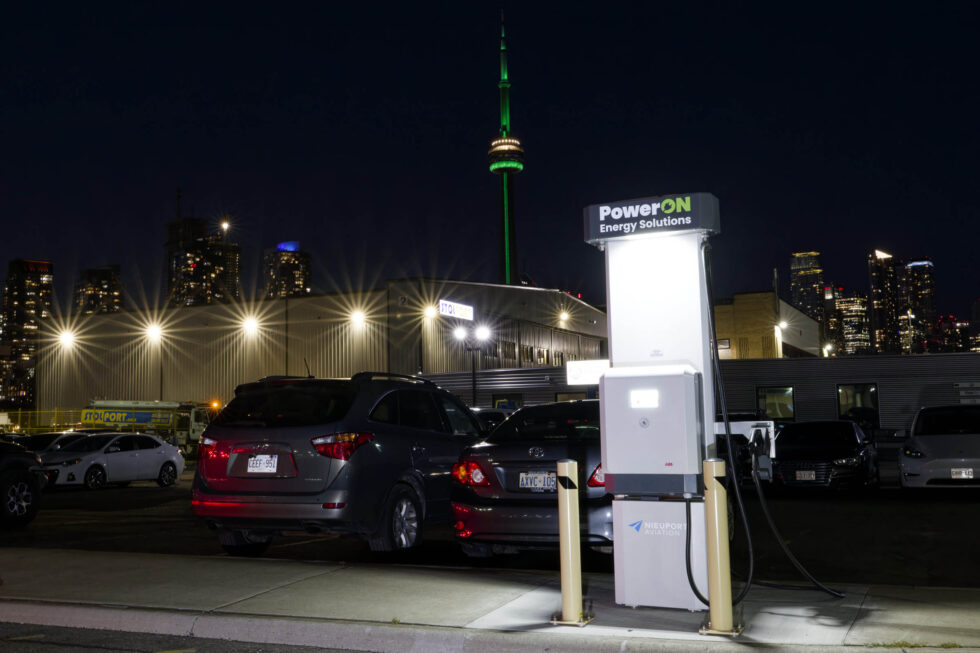
Ontario Power Generation (OPG) subsidiary PowerON was selected to install the necessary charging infrastructure to green the airport’s shuttle operation. This project, including chargers at the main pavilion where the airport’s complimentary shuttle bus picks up and drops off passengers, as well as on the island where the airport terminal is located, is now complete, ahead of time and under budget.

Billy Bishop Toronto City Airport terminal owner/operator, Nieuport Aviation, along with shuttle bus service provider TOK Group, have ordered six Vicinity Lightning™ electric buses, expected to take to Toronto’s streets in 2024.

Quick facts

  • As part of the support offered under the deal, PowerON led a successful funding application on behalf of the client, to assist with costs.
  • PowerON Energy Solutions works with fleet operators and municipalities, including the Toronto Transit Commission (TTC) and Oakville Transit. PowerON and the TTC have a 20-year agreement to help decarbonize the city’s bus fleet.
  • The new electric shuttle buses are estimated to reduce carbon emissions by 2,100 tonnes per year.
  • Environmental sustainability is a priority for the airport. With other environmentally friendly airport access options such as the fully electric Marilyn Bell ferry and the 185-metre pedestrian tunnel, Billy Bishop Airport is one of very few airports in the world that is fully walkable or bikeable.
  • In fact, 41 per cent of Billy Bishop Airport passengers choose to walk, bike, or take the complimentary shuttle bus or public transit from the airport.

Quotes

"It's not just families that are making the switch to electric vehicles; transit operators, municipalities and airports - like Billy Bishop Toronto City Airport - are making the switch to electric buses to get people where they need to go," said Todd Smith, Ontario's Minister of Energy. "I'm so pleased to see PowerON, a subsidiary of Ontario Power Generation, deliver the fast-charging infrastructure that will power these new buses with reliable and affordable energy from our province's world-class clean electricity grid."

“With the introduction of our electric shuttle buses, Nieuport Aviation, in collaboration with PortsToronto, is living our promise of operating a cleaner, greener and quieter Billy Bishop Toronto City Airport,” said Jennifer Quinn, Chief Strategy and Development Officer, Nieuport Aviation.

“Ontario’s clean electricity system has the power to electrify higher emitting sectors like transportation, and our work on the Billy Bishop Airport shuttles is a great example of that,” said Keegan Tully, PowerON Energy Solutions Managing Director. “We worked closely with the client to ensure the necessary infrastructure is in place and tested ahead of time, enabling a smooth roll-out when the buses arrive.”

“We are thrilled to join our partners Nieuport Aviation in welcoming PowerON’s charging infrastructure to Billy Bishop Airport,” said Warren Askew, Vice President, Airport at PortsToronto. “This announcement builds on a strong foundation of sustainable innovation at Billy Bishop Airport, which includes Canada’s first zero-emission ferry. Clean, electric infrastructure like this benefits our passengers, staff, community and those who live, work and play on Toronto’s remarkable waterfront – congratulations to all who helped bring this project to life.”

About PowerON Energy Solutions

PowerON, a subsidiary of Ontario Power Generation, is an electrification leader with resources and expertise to provide charging infrastructure and energy management for all types of fleets. PowerON minimizes the risks associated with the electrification of fleets by taking on the construction and operation of charging infrastructure, greatly simplifying the process while allowing clients to focus on core operations. PowerON pledges to reduce cost and time to electrify while increasing charging reliability for fleets.

About Nieuport Aviation

Nieuport Aviation is the owner and operator of the Passenger Terminal at Billy Bishop Toronto City Airport. Backed by significant international expertise in managing aviation infrastructure, we are committed to world-class customer service for the airport’s 2.8 million passengers. In addition to managing the Passenger Terminal, Nieuport Aviation offers passengers a free bus shuttle service between the airport and downtown Toronto, helping to provide a seamless travel experience. For more information, please visit www.nieuport.com.

LET’S CONNECT

Let’s get your electric fleet ready to go.

Bus Electrification Primer

Bus Electrification Primer

As the global push for sustainability gathers steam, transit bus operators have an opportunity to contribute meaningfully to the decarbonization of transportation. Electrification of transit buses presents an immediate and impactful solution for reducing greenhouse gas emissions, air and noise pollution for local communities.

However, transitioning from fossil fuel-powered buses to electric alternatives isn't as simple as replacing one for the other and installing chargers. It requires careful understanding of the available types of electric buses, their corresponding charging systems, and best practices for a seamless electrification process.

Types of Electric Buses

Battery Electric Buses (BEBs): Powered entirely by electricity stored in onboard batteries, BEBs are recharged at charging stations. They offer zero tailpipe emissions and often boast lower operating costs, but their range between charge is limited by the battery's capacity, making them ideal for fixed routes with predictable demands.

Hybrid Electric Buses (HEBs): These buses combine an internal combustion engine with an electric propulsion system, using energy stored in batteries for propulsion at lower speeds and the diesel engine at higher speeds. They emit fewer emissions than conventional diesel buses but do not achieve the zero-emission status of BEBs.

Hydrogen Fuel Cell Electric Buses (FCEBs): FCEBs use hydrogen gas to power an electric motor. While they emit only water and heat, the production of hydrogen can generate emissions and can be energy intensive.

Approaches to Charging for Electric Buses

There are two main approaches to charging electric transit buses:

  1. Depot Charging: The most common method, depot charging, involves installing charging infrastructure at the bus depot where buses are charged overnight. This solution works well for BEBs operating on routes where buses are able to achieve the entire daily schedule on a single charge.
  2. Opportunity Charging: For other routes, opportunity charging may be a more practical solution. Fast charging infrastructure is installed at endpoints or along the route, allowing buses to top up their battery during driver breaks or layovers. While this method can extend a bus's daily range, it often requires a larger upfront investment in infrastructure.

Choosing the appropriate charging hardware is as crucial as selecting the right electric bus type for your fleet. Understanding the benefits and distinctions between different types of charging technologies, particularly Overhead Pantograph Charging and DC Fast Charging, can guide you in making informed decisions.

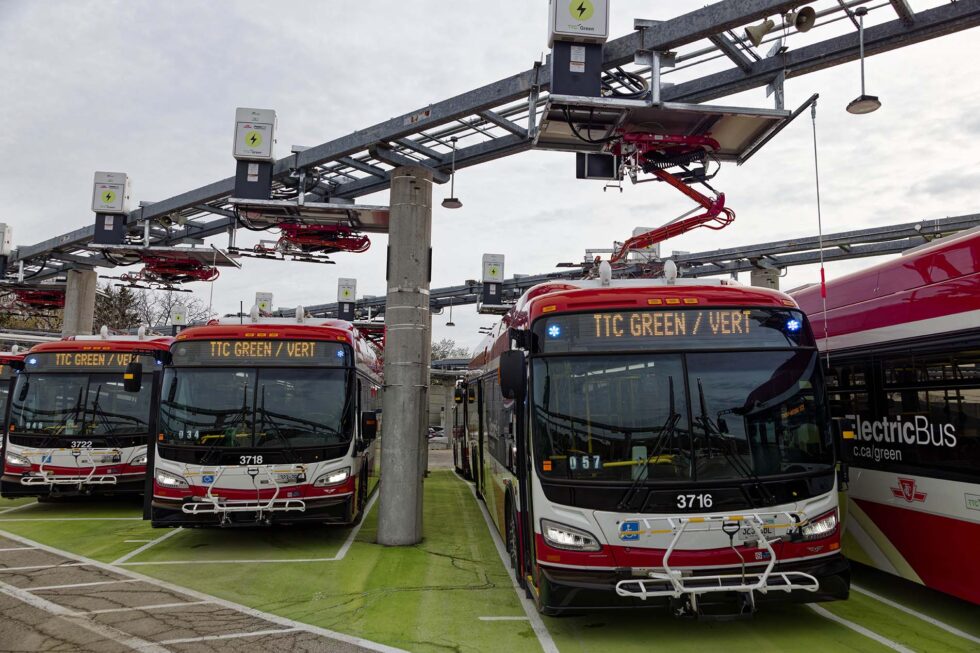
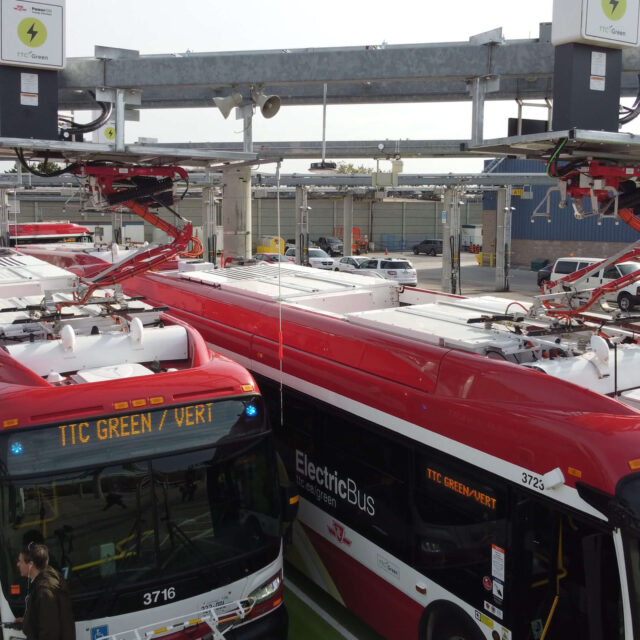
PowerON TTC Pantograph Charger

Overhead Pantograph Charging

This is a form of opportunity charging and a popular solution for high-demand routes where buses need to recharge multiple times throughout the day without returning to the depot. The system works by installing an overhead charging unit at selected stops, with the charging process initiated via a pantograph - a mechanical arm that extends from the charger to connect with the bus.

There are two types of pantograph charging systems: inverted and roof-mounted. Inverted pantographs are attached to the infrastructure, lowering onto the bus to charge. Roof-mounted pantographs are situated on the bus's roof and rise to connect with the charger.

Benefits of overhead pantograph charging include:

  • Flexibility: Pantograph systems can be strategically located at endpoints or busy stops, providing buses with more flexibility to recharge without needing extended downtime.
  • Reduced Battery Size: Since buses can recharge frequently, they can operate with smaller batteries, reducing the bus's weight and overall cost.
  • Scalability: The system is easy to expand as the fleet grows or route demands change.
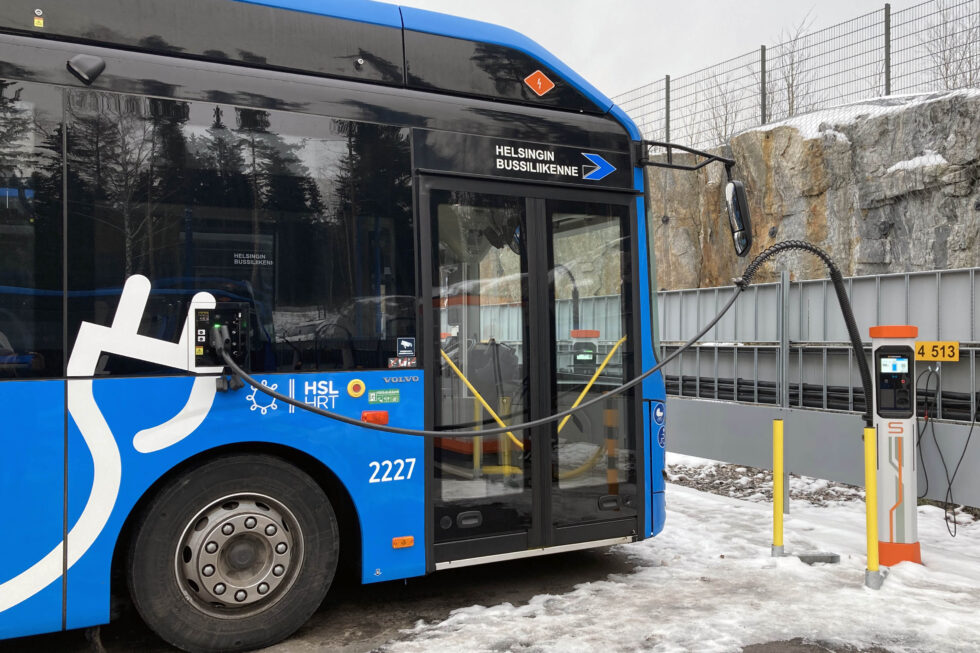
PowerON Electric Bus DC Fast Charging

DC Fast Charging

This is another form of opportunity charging that provides a rapid energy boost to buses during layovers or between routes. DC fast chargers can deliver a large amount of power quickly — usually 50 kW to 350 kW — directly to the bus's battery, bypassing the onboard charger for faster charging times.

Benefits of DC fast charging include:

  • Rapid Charging: This system can recharge a bus's battery much faster than traditional AC chargers, allowing for more uptime and less interruption to service.
  • Ease of Installation: DC fast chargers can be installed in existing depots or along routes, making them a versatile option for a variety of transit scenarios.
  • Reduced Stress on Grid: By charging rapidly during off-peak hours, DC fast chargers can help mitigate the strain on the power grid.

Each charging solution has its unique benefits and applications. The choice between overhead pantograph charging and DC fast charging will depend on your specific operational needs, route schedules, and infrastructure capabilities. A comprehensive analysis of these factors will ensure a successful transition to an electrified bus fleet.

Emerging Charging Technology - Wireless Electric Vehicle Charging

Also known as inductive charging, this is a type of charging that doesn't require a physical connection between the electric vehicle and the charging station. The technology relies on the principle of electromagnetic fields to transfer energy between two objects – a transmitting pad on the ground and a receiving pad on the vehicle.

Here are some of the key benefits of wireless EV charging:

  1. Speed: The primary advantage is the ability to simply park the vehicle or bus over the charging pad without having to plug in a charging cable. This can be especially beneficial in a transit environment with frequent vehicle turnovers, reducing the hassle of handling charging cables.
  2. Durability: With no physical connection, there's less wear and tear on charging ports and cables.
  3. Integration with Infrastructure: Charging pads can be integrated into existing infrastructure like depot parking spaces to overcome space constraint.

Best Practices for Bus Fleet Electrification

  1. Assessing Routes and Range Requirements: Begin with a comprehensive review of the bus routes, considering factors like distance, topography, and climate, which impact a bus's energy consumption and thus the suitable type of electric bus and charging infrastructure.
  2. Pilot Programs: Testing a few electric buses on select routes can offer valuable insights into how they operate in real-world conditions, which can inform the wider rollout.
  3. Workforce Training: Electric buses require different maintenance and operation practices. Ensure your team is trained and prepared to manage these new technologies.
  4. Upgrading Infrastructure: Consider the electrical capacity of your depot. If you opt for depot charging, you might need to upgrade your electrical service. For opportunity charging, determine the optimal locations for charging stations along your routes.
  5. Partnering with Experts: Given the complex logistics and technical challenges involved, working with experts like PowerON with hands-on experience in leading the largest transit electrification project in North America can help ensure the project is completed on time, on spec and on budget.
  6. Consider Total Cost of Ownership (TCO): While electric buses can have higher upfront costs, they often have lower operating and maintenance costs, potentially resulting in a lower TCO over the bus's lifetime.
  7. Secure Funding and Incentives: There are myriad federal, provincial, and local incentives to subsidize the cost of electric buses and infrastructure. Collaborating with a partner well-versed in these funding sources and adept at navigating the application process is the most efficient path to secure funds.
  8. Sustainability and Community Impact: Highlight the benefits of bus electrification to your stakeholders, including riders, employees, and the community at large. This can generate positive public sentiment and increased ridership.

The journey to electrification may be complex, but it's a necessary step towards a sustainable future for public transit. With the right strategies and resources, transit bus operators can navigate the electrification process effectively, creating cleaner, greener, and more cost-effective services for their communities.

LET’S CONNECT

Let’s get your electric fleet ready to go.

Depot Electrification Insights

Depot Electrification Insights

Tyler Seed, our transit electrification lead, recently shared some of his knowledge on planning in-depot electric fleet charging infrastructure during a webinar hosted by Electric Autonomy Canada. We offer a snippet from his detailed discussion, outlining strategic planning and installation approaches for effective depot electrification.

Future-proof your design and build today to save on headaches and cost overrun:

Fleet operators generally initiate their transition to electric vehicles with a small-scale pilot integrating only a handful of electric vehicles, with the general intent to phase in more vehicles over time.

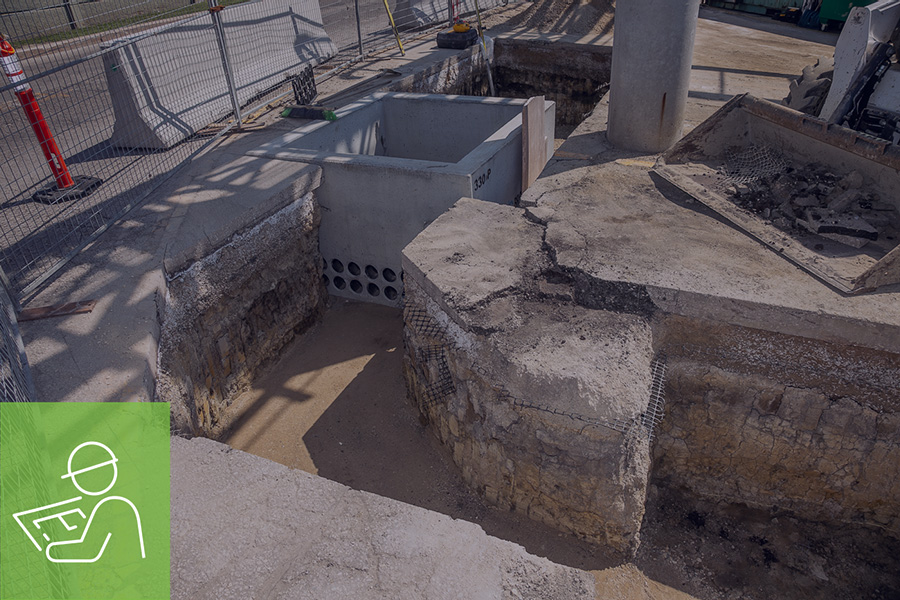
However, planning for the future from the outset is imperative. As much as possible, you want things done once and correctly. For example, installing oversize conduits and investing in a robust transformer system upfront are measures that can save you from unnecessary disruptions and costs in the future. Although the initial investment may be slightly more, there are ways to mitigate this.

PowerON Electrification Project Duct bank shown from the transfer vault to the DC controller

Future-Proof Today, Save Costs Tomorrow.

For example, if you're in the process of repaving a parking lot, we strongly recommend integrating conduits at this stage. In the context of an extensive paving project, an additional investment of fifty thousand dollars for conduit installation can prove to be an excellent strategic decision, saving on future reconstruction costs. 

Solar Power and Electrification: Harnessing the Sun for Sustainable Fleet Operations

In the summer we noticed an uptick in inquiries about the feasibility of integrating solar energy and establishing fleet charging infrastructure at remote locations where a microgrid, comprising solar and battery, might be necessary. Many are curious about how this integration occurs, in both remote site deployments and load management strategies.

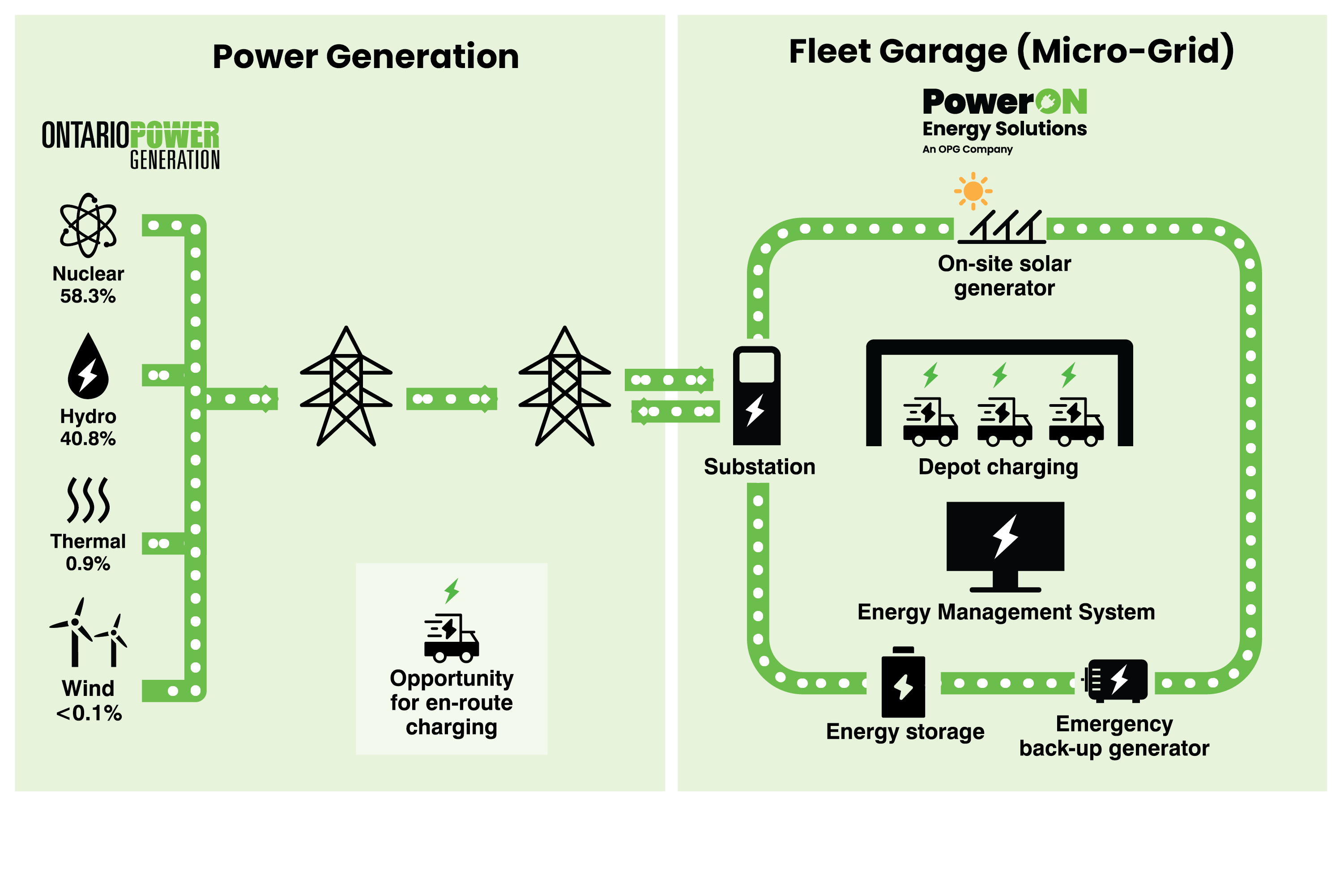
At PowerON, where a significant part of our work revolves around large-scale transit projects, the plan is often to transform entire sites into fully-fledged microgrids, controlled by an energy management system. We leverage on-site battery storage to manage demand charges, with solar energy occasionally contributing to demand management.

Currently, the push towards such solutions seems to be driven more by organizations' ambitions to decarbonize as much as possible, rather than being a purely financial consideration.

A common misconception is the belief that simply installing a few solar panels on a building can get you enough power to charge vehicles. In reality, the required solar generation capacity can be quite substantial, requiring a lot of space.

PowerON Depot Electrification Micro Grid

Limited On-site Power can be Managed

When power availability on a site is constrained, creative strategies may become necessary, such as load management techniques like smart scheduling and load balancing to optimize existing power capacity. Energy storage systems, used to store power in off-peak times and dispense during peak demand, can also be implemented to manage power constraints.

Through thorough planning, strategic execution, and leveraging technology, challenges with limited power can be addressed to facilitate efficient charging infrastructure.

Decomplicating Fleet Electrification

PowerON streamlines the electrification process by offering charging-as-a-service solutions, bundling together comprehensive charging infrastructure and financing options. This model allows businesses to handle a fixed monthly or annual payment for the infrastructure over a set term. We even offer an energy-as-a-service model, packaging a set electricity cost designed to the project's needs. This simplifies cost structures and lets fleet concentrate on their core operations, without the burden of owning and maintaining the charging infrastructure.

Fleet electrification should be seen as a phased journey, recognizing that building the necessary infrastructure and adjusting operations is a gradual process. It requires thoughtful planning, cooperation with utilities, and understanding the entire system's needs and constraints.

LET’S CONNECT

Let’s get your electric fleet ready to go.

Fleet Electrification Done Right

Fleet Electrification Done Right

Embarking on the journey towards fleet and depot electrification might seem like a daunting task. However, by following a methodical approach, you can pave the way to a successful transition. Here, we outline the critical steps that PowerON employs to ensure a successful transition.

Evaluation and Planning

The first step in this journey involves assessing your current operations, understanding your energy requirements, and establishing a robust electrification strategy. Your plan should include:

  • A detailed analysis of your fleet composition, route analysis, usage patterns, and expected growth to ensure future-proof infrastructure.
  • An evaluation of your current facility infrastructure to identify necessary upgrades.
  • Assessing your available power supply and potential needs for your electrified fleet today and into the future as your operation scales.
  • Identifying potential regulatory constraints and incentives for Electric Vehicles (EVs).

Selecting the Right Vehicles and Charging Solutions

Transitioning to electric vehicles requires thorough research to ensure the vehicles you choose align with your fleet's operational needs. This should include:

  • Evaluating the range of EV models available that meet your specific fleet needs.
  • Selecting the right charging solution and layout to optimize space and charging density without triggering major utility upgrades.
  • Considering vehicle lifecycle costs, including acquisition, operation, and maintenance costs.
  • Assessing the availability of charging infrastructure for the chosen EV models.

With your fleet requirements defined and your choice of vehicles made, the focus shifts to planning your facility infrastructure upgrade before the shovel hits the ground.

Site Analysis and Evaluation

Before initiating the construction process, comprehensive site evaluation studies are undertaken to ascertain if the site conditions are appropriate for setting up electric vehicle (EV) charging infrastructure. PowerON collaborates with property owners, fleet operators, and infrastructure developers to analyze a whole host of conditions, such as the site's past usage, engineering requirements, zoning regulations, site development procedures, permits and impact fees, parking availability, utility access, and licensing requirements. Our team liaises with local regulatory or municipal stakeholders to deepen our feasibility study and generates precise, detailed reports grounded in reality, tailored specifically for the fleet electrification project.

Permitting and Approvals

Permitting and approvals play a critical role in electrification infrastructure construction projects, ensuring they comply with local and national laws, meet safety standards, and minimize environmental impact. This process validates the project's design, quality, and durability while effectively managing potential risks. It also considers the impact on local communities and makes provisions for efficient resource management during construction. The importance of permitting and approvals cannot be understated, as they guarantee the legal, safe, and environmentally responsible execution of infrastructure projects, fostering better community relations and enabling high-quality, sustainable development.

Local Utility Engagement & Coordination

Utility coordination plays an integral role in fleet depot electrification, requiring comprehensive consultation and planning. It involves confirming civil and electrical requirements with utility providers, discussing site-specific issues with local municipalities, and determining power needs for charging. Advanced solutions like micro-grid technology may also be considered, necessitating even closer collaboration with utilities. Furthermore, due diligence with local governing agencies ensures regulatory compliance and smooth application processes. In essence, utility coordination is pivotal in ensuring an efficient, compliant, and successful transition to an electrified fleet depot.

PowerON Fleet Electrification Expertise

Design Review & Engineering Plan Sign Off

The design and building processes for fleet depot construction are multifaceted, time and resource intensive. PowerON acts as a one-stop shop for large-scale construction projects. Our electrification experts, architects, experienced contractors, and project managers collaborate closely to ensure alignment. This alignment of interests fosters a process with fewer questions and concerns and expedites the completion of the project.

Together we a develop a comprehensive construction plan—including civil, architectural, structural, and electrical—based on the requirements of the customer, property owners, electric vehicle charger manufacturers, relevant stakeholders, and local utility company.

Construction Project Management and Oversight

The importance of construction project management is paramount when it comes to fleet depot electrification. Effective project management continually refines and innovates designs throughout the project lifecycle, striving to achieve the most beneficial outcome for end users, tailored to both present and future needs.

PowerON Billy Bishop Toronto City Airport Electrification

Build & Create

PowerON as the single point of contact for coordinating diverse project stakeholders, including designers, contractors, property owners, regulatory agencies, and utilities, helps to streamline the construction process, ensuring that all parties are aligned and work towards a common goal. Effective construction project management provides for regular site visits to monitor progress, enforce standards, and detect potential issues early, minimizing the likelihood of costly delays or revisions.

Furthermore, it ensures strict adherence to quality assurance and quality control (QA/QC) measures, thus promoting compliance to industry standards, regulatory compliance, and enhancing the overall quality of the project. Effective construction project management also plays a crucial role in reducing risks, controlling costs, and ensuring the successful implementation of fleet depot electrification projects on time and on budget.

Commissioning and Closeout

Commissioning and closeout are crucial final stages in fleet depot electrification. These phases ensure the installed systems function as intended, providing the expected efficiency and reliability. They also involve necessary documentation, training, and final approval, guaranteeing the end solution aligns with the original project goals and customer requirements. PowerON, as a leading expert in fleet depot electrification, plays an integral role in this process. Our team performs rigorous testing, commissioning, and final inspections, drawing on our extensive experience and deep industry knowledge. We guide you through every step of the closeout, ensuring clarity, satisfaction, and the smooth transition to operation.

Final Hand Off

As your fleet depot electrification project approaches completion, our team at PowerON ensures that you're equipped with the necessary knowledge for the long-term maintenance and upkeep of your EV Charging facility. We understand the integral role these aspects play in prolonging the lifecycle of your facility, preserving its efficiency, and maximizing the return on your investment.

During our detailed walk-through of your project sites, we will familiarize you with the various components of your EV charging infrastructure. This includes explaining how each part functions, identifying key maintenance points, and providing you with practical tips to handle common issues. Our objective is to empower you to monitor the day-to-day operations effectively and understand when professional servicing might be required.

Moreover, we will guide you through the specifics of preventive maintenance. This includes routine checks and adjustments to prevent minor issues from escalating into major problems, ensuring the long-term reliability of your EV charging facility.

Furthermore, we will introduce you to the latest industry-standard practices for upkeep, helping you ensure compliance with regulations while maintaining optimum operational efficiency. This would also encompass training on safety protocols, demonstrating how to handle emergency situations related to your EV charging facility, and ensuring the safety of personnel and property.

Continuity & Support

Ongoing Operations & Maintenance

Finally, our post-project support does not end with the walk-through. PowerON is committed to providing continuous ongoing operations and maintenance to provide certainty of operations for clients. Whether it's a minor query or a significant concern, we are always available to assist you and ensure the smooth operation of your EV charging facility. Our goal is to help you succeed, making the transition to fleet depot electrification as seamless and smooth as possible.

Electrify Your Success with Expert Insights

Subscribe today for the latest updates on fleet electrification and energy management strategies.

TTC, PowerON unveil innovative eBus charging systems

April 26, 2023
5 min read

TTC, PowerON unveil innovative eBus charging systems

TORONTO, April 21, 2023 /CNW/ - Today, the TTC and PowerON Energy Solutions were joined by Deputy Mayor Jennifer McKelvie, as they unveiled ten newly-commissioned battery-electric bus (eBus) charging pantographs as part of a proof of concept at Birchmount Garage, expanding the TTC's charging capacity.

The new pantographs will support overhead charging, delivering electricity from a centralized power source to chargers mounted above battery-electric buses. This innovative transit charging system is the first phase of a 20-year agreement between the TTC and Ontario Power Generation subsidiary, PowerON Energy Solutions.

"The City of Toronto is proud to support this innovative eBus charging system here in Scarborough as part of the work underway to make sure our TTC fleet is cleaner and greener," said Deputy Mayor Jennifer McKelvie. "This new system is good news for our transit system and our environment just ahead of Earth Day. Expanding the TTC's charging capacity is crucial to our plans to have a completely green fleet in the future and we won't get there without the continued cooperation and commitment of all our government partners."

"Ontario's clean electricity grid is ready to support the electrification of public transit, the transportation sector and beyond," said Todd Smith, Ontario's Minister of Energy. "I'm pleased that Ontario Power Generation subsidiary PowerON has led the installation of this state-of-the-art charging technology that will help the City of Toronto reduce emissions and deliver a greener, healthier public transportation system, getting people to work, school and home."

"We're grateful for the continued support of our partners at the City of Toronto and PowerON," said TTC Chair Jon Burnside. "The TTC operates one of the largest fleets of battery-electric buses in North America, and we look forward to continuing to expand and improve our eBus program, as we work towards a completely green fleet by 2040."

Under the agreement, PowerON designs, builds, co-invests in, owns, and operates charging infrastructure to electrify the TTC's bus fleet and facilities.

"PowerON provides innovative charging solutions so municipalities and others can green their fleets," said PowerON Managing Director, Keegan Tully. "The Birchmount Garage system sets the stage for broader transit electrification in Toronto and beyond."

"We're very excited about this new charging infrastructure, as the overhead chargers are more compact, and will allow us to charge more eBuses faster, in more locations," said TTC CEO Rick Leary. "With additional hybrid-electric buses joining our existing fleet over the next few months, and the eBuses that will follow, we are bringing more environmentally-friendly and quieter vehicles to even more routes across the city."

This Birchmount proof of concept is funded by the City of Toronto, who have contributed over five million dollars to the project. The TTC will use the system to gather and evaluate reliability and operations data prior to broader deployment.

The TTC will transition its bus fleet to 100 per cent zero emissions by 2040 or sooner.

About PowerON Energy Solutions

PowerON, a subsidiary of Ontario Power Generation, is an electrification leader with resources and expertise to provide charging infrastructure and energy management for all types of fleets.

PowerON minimizes the risks associated with the electrification of fleets, like the TTC's buses, by taking on the construction and operation of charging infrastructure, greatly simplifying the process while allowing organizations like the TTC to focus on core operations. PowerON promises to reduce cost and time to electrify while increasing charging reliability for fleets.

For further information:

Media contact:

TTC Corporate Communications, 416-981-1900, [email protected];

PowerON: [email protected]

LET’S CONNECT

Let’s get your electric fleet ready to go.